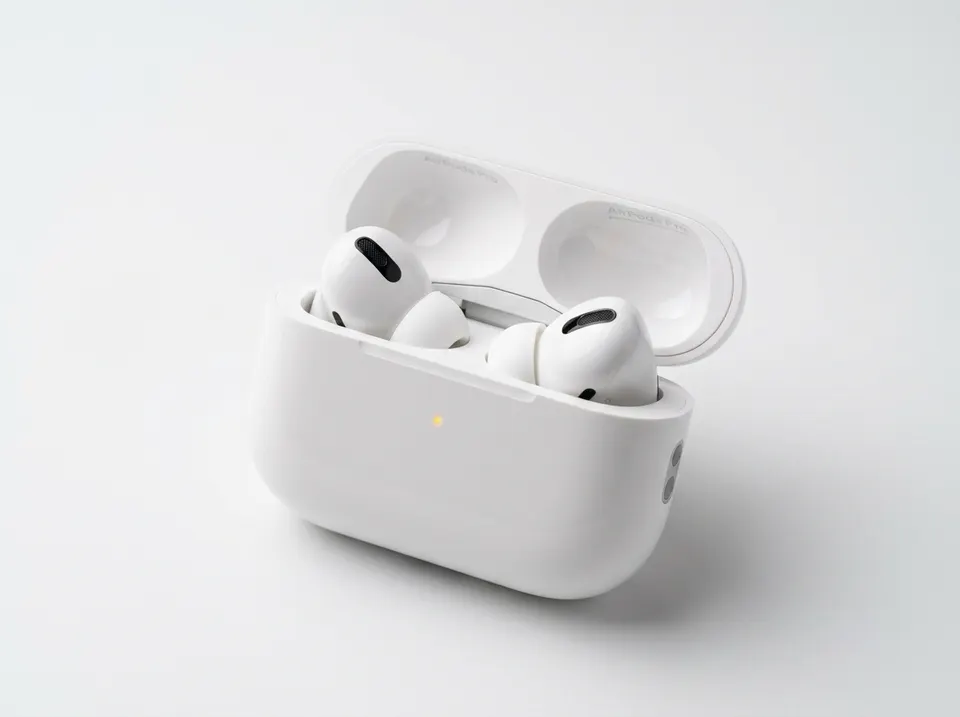
Evidence notice: AirPods Pro 3 are an official shipping product, but FlawCheck has not physically tested a retail unit. Confirmed specifications and compatibility rules come from Apple; claims about ANC, fit and battery life are identified as manufacturer claims until independently verified. This page remains not scored.
AirPods Pro 3 fix several obvious weaknesses of the previous generation. Apple rates them for up to eight hours of listening with ANC, raises both the buds and case to IP57, adds heart-rate sensing, and ships five foam-infused ear-tip sizes. The US price is $249, not $279.
But the downside-first buying question is not whether AirPods Pro 3 are better than AirPods Pro 2 on a specification sheet. It is whether those improvements justify buying another pair of sealed-battery earbuds—especially when several software features require a recent iPhone, supported languages and the latest operating systems.
Quick take: the ownership tradeoffs
| Buyer question | Confirmed now | Downside to check |
|---|---|---|
| Is battery life better? | Apple rates up to 8 hours with ANC | Falls to 7.5 hours with head-tracked Spatial Audio or 6.5 hours with heart-rate sensing; aging remains unmeasured here |
| Is ANC dramatically better? | Apple claims up to 2x more effective ANC than Pro 2 | Apple’s test is controlled; fit and seal can materially change the result |
| Is the fit better? | Smaller architecture and five tip sizes, including XXS | No universal ear shape exists; buy from a seller with a practical return policy |
| Does Live Translation add value? | Supported on compatible Apple setups | It is region/language dependent and also works on some older H2 AirPods |
| Is it more durable? | Buds and case are IP57 | Water resistance is not waterproofing; sealed batteries remain the long-term ownership limit |
| Is $249 good value? | Price is unchanged from the prior US launch price | Value collapses if you use Android or already own healthy AirPods Pro 2 |
1. The sealed battery is still the largest ownership downside
Every true-wireless earbud contains tiny lithium-ion batteries. Capacity declines with charge cycles, time, heat and storage conditions. AirPods Pro 3 improve fresh-battery runtime, but they do not turn those batteries into user-replaceable parts.
This distinction matters because a worn battery can make otherwise functional earbuds inconvenient long before the speakers or controls fail. Apple offers AirPods service and can assess battery-related problems, but its standard limited warranty does not cover batteries worn down through normal use. Out-of-warranty pricing and service options vary by country, coverage and inspection result.
The honest conclusion is not that every pair dies after exactly two years; there is no responsible universal countdown. It is that buyers cannot perform a simple, low-cost battery swap themselves. That makes long-term cost less predictable than the $249 purchase price suggests.
If repairability is your top priority, no mainstream sealed true-wireless earbud is an ideal category. The best way to reduce the risk is to avoid premature upgrades, keep the case away from heat and compare local battery-service terms before buying.
2. The headline eight-hour battery figure is conditional
“Up to eight hours” is a useful improvement, but it is not the runtime for every feature combination.
Apple’s own specification page separates three scenarios:
- Up to 8 hours with Active Noise Cancellation enabled.
- Up to 7.5 hours with Spatial Audio and head tracking enabled.
- Up to 6.5 hours with heart-rate sensing during workouts.
- Up to 24 hours total with the charging case and ANC enabled.
Those figures come from Apple testing and apply to new hardware under defined conditions. Volume, calls, signal quality, temperature and battery age can reduce actual listening time. The case total is also not “continuous battery life”; it includes stopping to recharge the earbuds.
The heart-rate tradeoff deserves special attention. Workout tracking is one of the main reasons to choose Pro 3 over Pro 2, yet enabling it corresponds with Apple’s lowest quoted listening figure among the major modes. That may be irrelevant for a one-hour run, but it matters for long hikes, travel days and endurance events.
3. Apple ecosystem lock-in is part of the price
AirPods Pro 3 can function as Bluetooth earbuds with non-Apple devices. Apple explicitly warns, however, that functionality may be limited outside a current Apple setup.
The basic audio connection is not the premium experience being sold. Much of the value comes from integration: quick pairing, device switching, Find My, personalized Spatial Audio, hearing features, Fitness integration, firmware delivery and Apple Intelligence-dependent features.
That produces a simple value test:
| Your device mix | What the $249 buys |
|---|---|
| Recent iPhone plus other Apple devices | Access to the broadest feature set and ecosystem convenience |
| iPhone plus Windows computer | Strong iPhone experience, more ordinary behavior on the PC side |
| Android-first | Premium hardware with a reduced software proposition |
| Frequently switching ecosystems | Higher risk that useful features and settings do not travel with you |
If you may switch from iPhone to Android during the life of the earbuds, compare controls, firmware support and multipoint behavior before treating AirPods Pro 3 as a long-term purchase.
4. Live Translation is not an AirPods Pro 3 exclusive
Live Translation sounds like a generation-defining reason to upgrade. Apple’s requirements make the decision less simple.
The feature needs compatible AirPods firmware, an Apple Intelligence-enabled iPhone, a recent iOS version, and supported languages and regions. Apple also supports Live Translation on AirPods Pro 2 and AirPods 4 with ANC under its stated requirements.
Therefore, Live Translation is a weak standalone reason for a Pro 2 owner to spend $249. It may still be useful, but buyers should first check whether their current earbuds and iPhone already qualify. They should also confirm that the exact language pair and region they need are supported—not merely assume “Live Translation” means every language everywhere.
Translation output also deserves the same caution as any automated language tool. It can assist a conversation; it should not be treated as guaranteed accuracy for medical, legal, safety or financial decisions.
5. Heart-rate sensing may duplicate a device you already own
AirPods Pro 3 use a photoplethysmography sensor during workouts and integrate the result into Apple’s Fitness experience. That can be valuable for people who exercise with an iPhone but do not want an Apple Watch.
For existing Apple Watch owners, the purchase case is narrower. The earbuds may add convenience in specific workouts, but a second heart-rate source does not automatically create $249 of new value. Accuracy across interval training, cycling, cold weather, sweat and imperfect fit needs independent comparison before FlawCheck treats it as a proven replacement for a watch or chest strap.
The feature is also ecosystem-bound. Buyers should verify the required OS versions and regional availability for the fitness or hearing workflows they actually plan to use.
If health tracking is central to your Apple setup, our Apple Watch Series 12 vs Series 11 comparison examines another upgrade decision where new health features need to justify replacing working hardware.
6. Better fit is plausible, not guaranteed
Apple redesigned the internal architecture and supplies five foam-infused tip sizes from XXS through L. More size choices are genuinely useful because ANC, bass response, comfort and heart-rate sensing all depend on a stable seal.
Yet aggregate ear-scan data cannot guarantee comfort for one person’s ears. A deeper or differently angled fit can improve stability for one buyer and create pressure for another. A poor seal can also make excellent ANC hardware perform like mediocre ANC.
This is why fit should be treated as a purchase condition, not a spec-sheet victory. Use Apple’s Acoustic Seal Test, try every plausible tip size, wear the earbuds long enough to detect pressure, and confirm the seller’s return rules before the return window expires.
7. IP57 and recycled materials do not solve repairability
The IP57 upgrade is meaningful. Apple lists that rating for both the earbuds and the charging case, improving the ownership story for workouts and rain compared with the previous IP54 generation.
It still requires careful interpretation. Water resistance is tested under laboratory conditions, can diminish through normal wear and does not make the product waterproof. An IP rating also says nothing about whether a worn battery, damaged connector or internal component can be economically repaired.
Apple says AirPods Pro 3 use 40 percent recycled content by weight, including recycled cobalt and lithium in the battery. That reduces some material impact, but recycled inputs and repairability are different questions. A product can use more recycled material while remaining difficult for its owner to open, repair or keep running after battery degradation.
There is one smaller ownership annoyance too: Apple lists the USB-C charging cable as sold separately. Existing USB-C, Qi, MagSafe or Apple Watch charging hardware makes this easy to absorb, but first-time buyers should not assume a cable is in the box.
AirPods Pro 3 vs keeping AirPods Pro 2
| Upgrade reason | Upgrade now? | Why |
|---|---|---|
| Your Pro 2 batteries are badly degraded | Maybe | Compare service cost with replacement; do not assume a whole new pair is the only option |
| Pro 2 fit is unreliable during workouts | Maybe | Five sizes and the redesign may help, but fit must be tried personally |
| You want Live Translation | Usually no | Compatible Pro 2 units can also support it |
| You want heart-rate sensing without a watch | Stronger case | This is a distinctive Pro 3 use case if the iPhone workflow suits you |
| You want longer single-charge ANC runtime | Reasonable case | Apple moves from the prior generation’s rating to up to 8 hours, but real use varies |
| Your Pro 2 works well | Wait | The least expensive and lowest-waste option is to keep using it |
Who should buy—and who should wait
Buy AirPods Pro 3 if you use a compatible iPhone, need class-leading ecosystem convenience, and specifically benefit from better rated battery life, a more secure fit, IP57 protection or heart-rate tracking.
Wait or keep AirPods Pro 2 if your current pair fits well, holds enough charge and already provides the software features you need. A healthy Pro 2 does not become obsolete merely because Pro 3 exists.
Choose a different platform-focused earbud if Android is your primary device, advanced codec support or cross-platform controls matter more than Apple integration, or you expect to switch ecosystems soon.
Final verdict
AirPods Pro 3 are not a bad product disguised by marketing. They are a capable $249 product whose best value is concentrated inside Apple’s ecosystem.
The biggest improvements are concrete: Apple rates longer listening time, both case and buds carry IP57, there are five tip sizes, and heart-rate sensing creates a useful watch-free workout option. The biggest downside is equally concrete: the sealed-battery ownership model has not changed.
For a new iPhone user who needs premium earbuds, AirPods Pro 3 deserve consideration. For a satisfied AirPods Pro 2 owner, the downside-first answer is simpler: keep the pair you already own unless fit, battery condition or heart-rate tracking solves a problem worth $249.
Sources and verification scope
- Apple AirPods Pro 3 announcement — price, launch claims, fit, ANC methodology, battery claims and feature requirements.
- Apple AirPods Pro 3 technical specifications — weight, IP57, battery modes, charging, connectivity, included accessories and system requirements.
- Apple AirPods repair and service — warranty limits, battery wear language and service process.
Editorial disclosure: FlawCheck did not physically test this product. This research-based assessment separates manufacturer specifications from unverified real-world outcomes. Pricing, availability, service terms, compatibility and regional feature support can change; verify them before purchase.