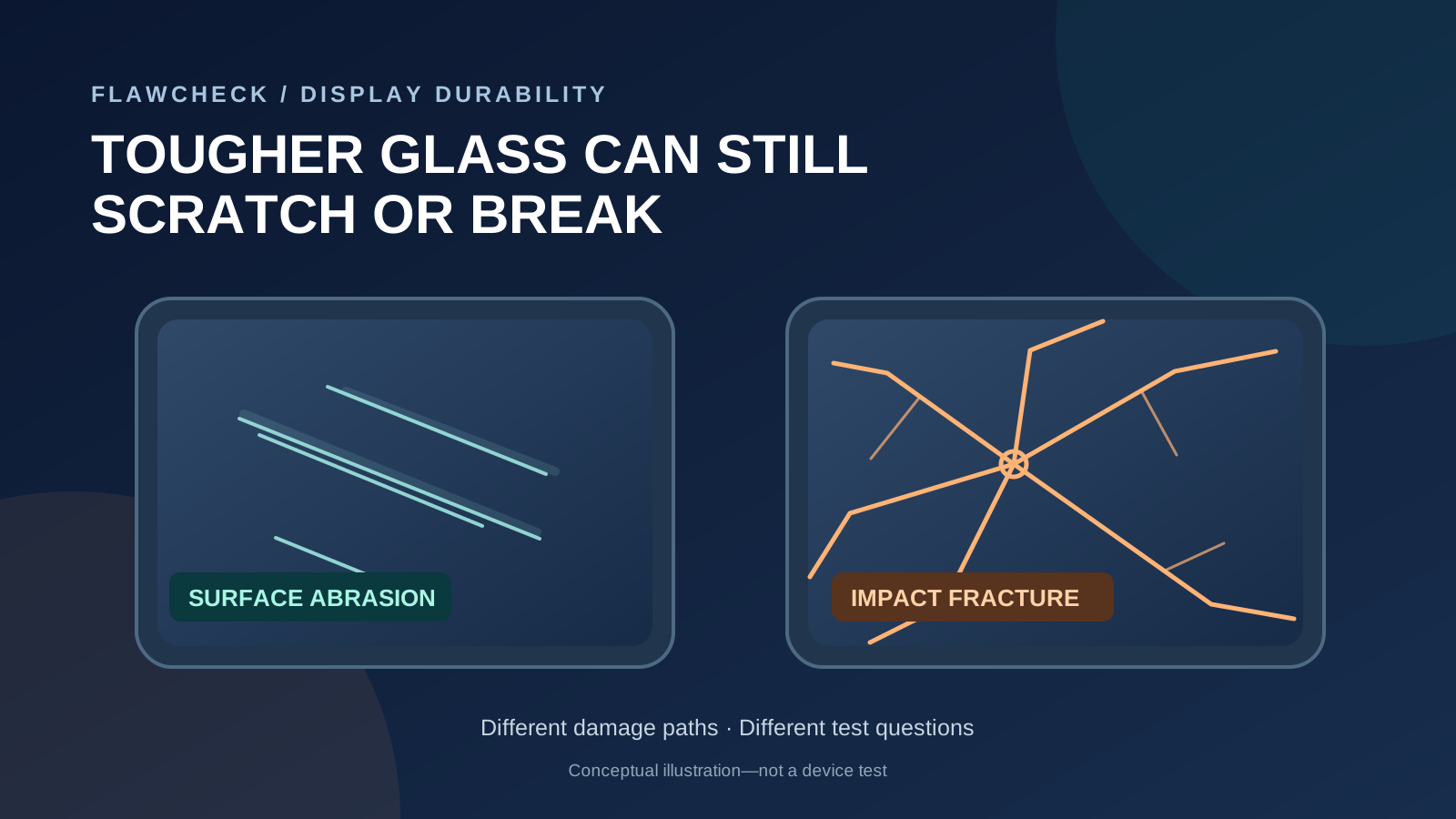
A phone can advertise tougher screen glass and still pick up a visible mark in your pocket. It can survive one fall onto a floor and crack on a shorter fall outside. Neither event automatically proves that the glass claim was false. The claim may describe a particular kind of damage, measured under particular conditions, while your phone experienced something else.
The quick answer: Scratch resistance concerns damage at the surface. Drop resistance concerns whether a glass part survives an impact. A cover-glass name tells you something about a material or product family, but it cannot predict every result for an assembled phone. Surface grit, existing damage, the point of impact, the phone’s construction, and the test method all matter. Corning explicitly says Gorilla Glass can break, even though it is designed to resist common damage events. Corning Gorilla Glass FAQ
If you are comparing phones, ask three questions before accepting a durability claim: Which surface and glass generation? Compared with what? Tested how? Those answers are more useful than the word “tough” on its own.
What Your Phone’s Screen Glass Actually Protects
The cover glass is the outer protective surface of a conventional phone display. Beneath it sits a display assembly with touch-sensing and image-producing parts; the exact arrangement varies by model. Corning distinguishes its exterior Gorilla Glass from glass substrates used inside LCD panels. A cracked exterior surface, a failed touch layer, and a damaged OLED or LCD panel therefore need different descriptions, even if a repair shop replaces them as one assembly. Corning Gorilla Glass FAQ
There may also be a coating on the exposed surface. Apple, for example, describes an oil-repellent coating on iPhone glass and warns that it wears with use and can be diminished by abrasive materials. A removable screen protector adds another surface above the phone’s original glass. When you notice a mark, establish which surface is marked before judging the phone’s glass. Apple Support: Cleaning your iPhone
This distinction matters after a drop, too. An intact-looking top surface does not establish that the display underneath works, while a cracked protector does not by itself establish that the phone’s cover glass cracked. Check the image and touch response without pressing on damaged glass. If the display shows lines, black patches, or dead touch areas, arrange an inspection rather than assuming the problem is merely cosmetic.
Foldable inner screens are a separate construction. Their flexible display, protective layers, and factory film are not interchangeable with the rigid cover glass discussed here. For the different ownership risks of flexible displays, see whether foldable phones can last five years. If a factory film is lifting, follow the foldable screen-protector guide before trying to remove it.
Scratch Resistance and Drop Resistance Are Different
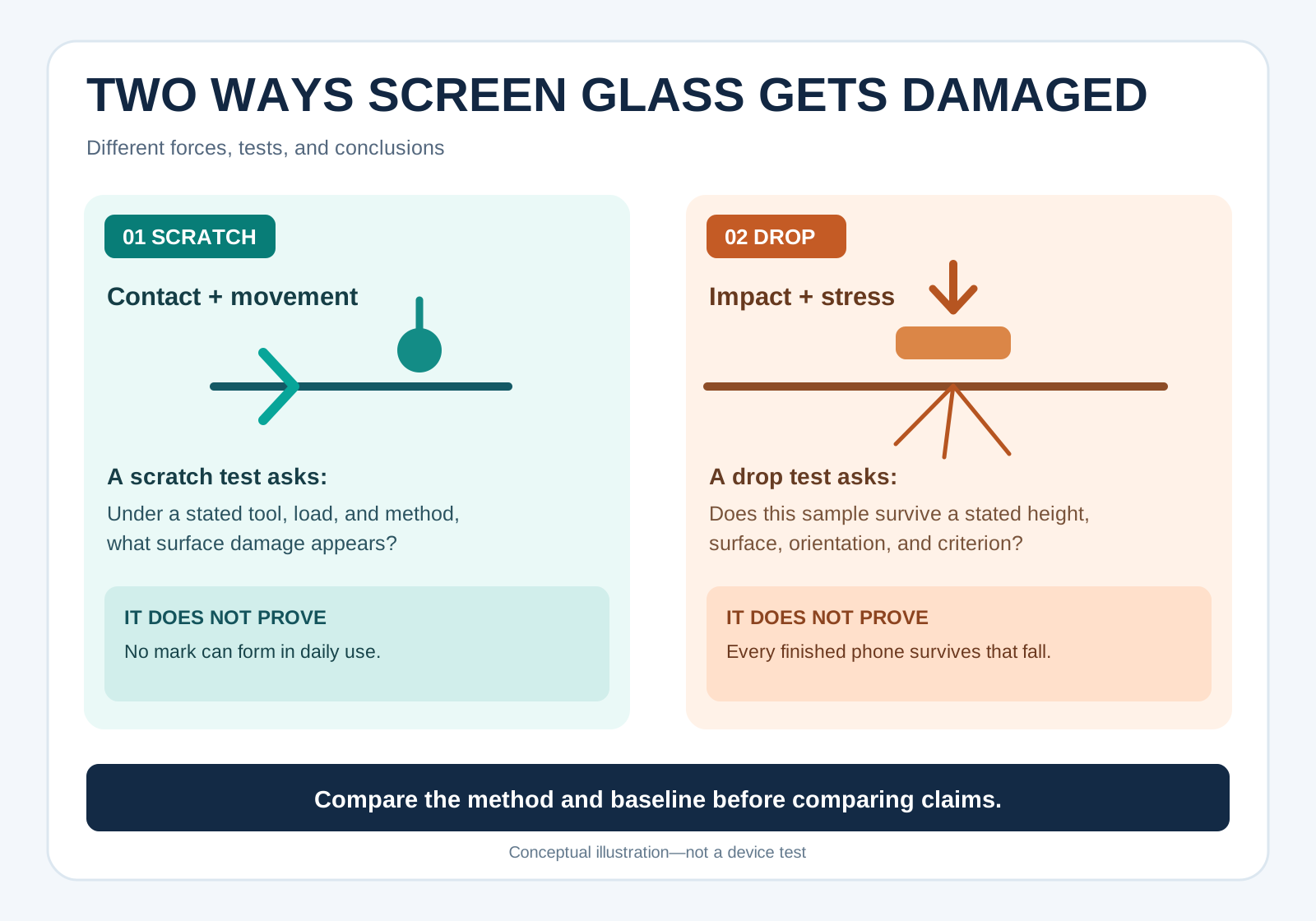
A scratch test applies contact and force to a surface and observes a mark or damage. A drop test subjects a sample or device to a collision and observes whether it survives according to that test’s criteria. Surface hardness, resistance to scratch damage, and survival of an impact describe related but different behavior. Neither one can be reduced to a single universal “durability” number.
Chemical strengthening provides a useful example. Corning explains that ion exchange creates a compressive layer in Gorilla Glass. Surface compression helps resist the tension that can turn flaws into cracks. It improves damage resistance, but does not make the surface immune to all contacts or the glass unbreakable. Corning’s account also explains why a pre-existing surface flaw can be relevant to a later fracture; it does not let us diagnose the cause of a particular owner’s cracked phone from a photograph. Corning: How It Works—Strengthening Glass
It is tempting to say that making glass more resistant to a fall must make it easier to scratch. That is too broad. Corning reported improvements in both drop and scratch performance for Gorilla Glass Victus under its tests. A particular material design may involve engineering trade-offs, but no blanket rule tells you how two different generations or phones compare without comparable measurements. Corning Gorilla Glass Victus
| Claim or specification | What it means | What it does not prove |
|---|---|---|
| Scratch resistant | A surface performed better against a specified scratching or abrasion method. | The screen cannot develop a visible mark in daily use. |
| Survives a one-meter drop | A sample met a survival criterion at that height on a named surface in a defined setup. | Every complete phone will survive every one-meter fall. |
| “3× better” or “4× tougher” | A manufacturer reports a relative result against a particular baseline. | Three or four times fewer damaged phones in ordinary ownership. |
| Named glass generation | The phone is said to use an identifiable cover-glass product on a specified surface. | Equal protection across all phone designs or tests by different companies. |
| “9H” on a protector | It may denote a pencil-hardness grade when the maker identifies that method. | A Mohs hardness of nine or a shatterproof display. |
Table note: These are rules for reading claims, not results for a specific phone. Ask for the test method and comparison baseline before relying on a number.
Why Tougher Glass Can Still Scratch
A visible line can have several explanations. It might be a mark in a replaceable protector, damage to the phone’s exposed surface, a changed coating, or material deposited by something that rubbed against it. Those possibilities should not be treated as identical. On certain iPhone models with textured matte glass or Ceramic Shield on the back, Apple says transferred material can resemble a scratch and can often be removed. That statement concerns the specified finishes; it does not establish that a mark on every front screen will wipe away. Apple Support: Cleaning your iPhone
Actual scratches depend on the contacting material, its shape, the force, and movement across the surface. A pocket or bag is not a controlled scratch test: particles can be trapped between the phone and another object, and pressure changes each time you move. It is safer to describe grit as a potential abrasive than to blame every scratch on keys, coins, or one named mineral. Without examining the mark and contact conditions, the culprit is unknown.
The coating matters for daily use. A surface coating or added protector can also change reflections; if visibility is your concern, see why phone screens can look dim outdoors before treating glass durability and glare as one specification. Apple’s cleaning guidance says the oil-repellent coating wears over time; abrasive materials can diminish it and may scratch the phone. A surface that now smudges more easily has not necessarily acquired a deep groove in the cover glass. Conversely, a line that remains after appropriate cleaning should not be promised a home remedy. Avoid abrasive polishing advice; follow the manufacturer’s cleaning directions for the exact device. Apple Support: Cleaning your iPhone
When checking a mark, first establish whether a protector is installed. Inspect under good light without scraping at the edge or pressing hard on damaged glass. Clean gently according to the phone maker’s instructions. If the mark persists, you may still need a technician to distinguish layers; a photograph alone rarely proves its depth or cause.
Why a Short Drop Can Still Break a Screen
Drop height is only one part of an impact. The point of contact, the roughness and stiffness of the surface, the orientation of the phone, and any earlier damage can change the stress experienced by the cover glass. Corning describes glass fracture as the growth of flaws under tension, and its drop-testing work specifically pays attention to sharp-contact damage on rough surfaces. That explains why comparing “one meter” from two unlike tests can mislead. It does not make any particular short fall predictable. Corning: How It Works—Strengthening Glass · Corning Gorilla Glass Victus 2
Consider Corning’s Victus 2 example. Its published setup uses a drop tower, Corning-designed pucks representing larger, heavier phones, and rough test surfaces made with 80- and 180-grit sandpaper to simulate sharp contact. Corning says Victus 2 survived drops up to one meter onto a surface replicating concrete in that lab setup. The finding supports a claim about that glass in that method. It does not promise that a retail phone with the glass will survive a one-meter drop onto any pavement, at any angle, after months of wear. Corning Gorilla Glass Victus 2
The complete phone also matters. Its size, mass, frame, how the display assembly is supported, and how a case fits can affect what reaches the glass during an impact. Treat these as factors to examine, not as a formula for predicting one phone’s survival. FlawCheck’s phone-frame materials guide makes the related point that a strong frame material alone does not prevent a cracked screen.
A phone that survived yesterday’s drop may have accumulated damage that is hard to see. Corning explains the role of surface flaws in subsequent fracture, but without inspecting the device we cannot say whether an earlier event caused a later crack. When a screen breaks, the honest conclusion is narrower: the impact exceeded what that particular assembly could withstand under those circumstances.
What Gorilla Glass and Ceramic Shield Claims Mean
Gorilla Glass is a family of cover-glass products, not one timeless specification. A phone maker should identify the generation and the surface where it is used. Corning maintains a device list but says customer agreements prevent it from naming every device; absence from that list alone does not prove the material is absent. Check the manufacturer’s specification for the exact phone as well. Corning Gorilla Glass FAQ
Corning’s original Victus announcement is a useful counterexample to sweeping claims about the trade-off between scratches and drops: Corning says it improved both properties under its tests. The comparison is against specified competitive aluminosilicate glass, not an automatic ranking above every later glass or every finished phone. Victus 2 focuses its published drop claim on rough-surface performance; its laboratory setup matters more than the name alone. Corning Gorilla Glass Victus · Corning Gorilla Glass Victus 2
Apple says the Ceramic Shield 2 front cover on the iPhone 17 has a new Apple-designed coating with three times better scratch resistance than the previous generation. That is Apple’s comparative claim, not an observed threefold reduction in scratches among owners. Apple also identifies Ceramic Shield on the back of certain models, which should not be confused with Ceramic Shield 2 on the front. Read the exact model’s specification before transferring either claim to a different iPhone. Apple Newsroom: iPhone 17 · Apple Newsroom: iPhone Air
Other makers use other glass names. A brand name can help identify what to investigate, but it is not a cross-brand score. If one supplier compares against an unnamed competitor while another compares with its previous generation, those multipliers cannot be placed on a single ranking chart. The meaningful questions remain: what was tested, against which baseline, and on which finished device?
What Scratch and Drop Tests Cannot Tell You
A convincing-looking video may show only one sample and one sequence of impacts. The first drop can change the condition of the phone before the second. An uneven sidewalk, a polished tile, and a roughened laboratory surface are not equivalent. Even two tests from the same height can differ in orientation, case, weight, and whether the sample had prior damage. A result without those details is an illustration of what happened to that sample, not a failure rate for all owners.
To compare two tests fairly, look for the number of retail units, exact device configurations, starting condition, drop height, surface, impact orientation, order of repeated drops, failure definition, and whether the procedure was repeated. A component puck is useful for studying glass under controlled conditions; a complete-device test answers a different question. Neither automatically measures years of ordinary ownership.
Scratch videos need the same care. What tool touched the surface? Under what load? Was the line actually a scratch in glass, a mark in a coating, or transferred material? Does the reviewer repeat the test across samples? A numbered pick or a visually striking scrape is not a complete durability evaluation.
You may also encounter “9H” on a screen-protector listing. Ask the seller what test it means. ASTM D3363 describes a pencil hardness test for coating films and warns that results can vary with pencils and substrates. A pencil-grade claim should not be presented as a Mohs mineral-hardness rating, proof that a protector is scratch-proof, or evidence that the phone beneath cannot break. If a listing does not state its method, the number is too ambiguous to compare. ASTM D3363-22
Do You Still Need a Case or Screen Protector?
A case can be a sensible purchase if accidental drops are a recurring risk; a replaceable protector can be appealing if you prefer to sacrifice an inexpensive outer surface rather than accumulate marks on the phone’s glass. Neither accessory guarantees survival. Fit, coverage, materials, installation, and the actual impact still matter. A case can also change the feel and size of the phone, while a protector can alter touch feel, reflections, or the appearance of coatings. Check the product’s compatibility and return terms rather than treating marketing labels as warranties.
If you rarely drop a phone and care strongly about its bare-screen feel or anti-reflective finish, going without a protector is a reasonable preference, provided you accept the possibility of permanent marks and repair cost. If you handle the phone outdoors, share a bag with abrasive objects, or plan to keep it for years, a replaceable protector and well-fitting case may be worthwhile. These are risk choices, not claims that every user must buy an accessory.
This advice concerns conventional rigid cover glass. Do not apply it to a foldable’s factory-installed inner film. The foldable screen-protector guide explains why removal and replacement require model-specific guidance.
Match Protection to Your Habits
| Your use habit | Protection to prioritize | Limit that remains |
|---|---|---|
| You often drop your phone | A well-fitting case with coverage around the display; check repair cost as well. | No case guarantees survival at every angle or on every surface. |
| You use it around sand or grit | Keep abrasive particles away from the screen; consider a replaceable protector and clean by the maker’s instructions. | A protector can itself mark or crack, and exposed parts can still be damaged. |
| You want the bare-screen feel and finish | Use the original surface and handle it with care; know the replacement cost. | You accept possible permanent marks and a less replaceable outer surface. |
| You keep phones for years | Balance a case/protector with local repair access and replacement pricing. | Accessories do not stop coating wear, all impacts, or display faults. |
These are risk-based choices, not tested rankings of accessories. Check compatibility with your exact phone.
What to Check Before Buying
Start with the exact device’s front-glass specification. Confirm whether the advertised glass appears on the front, back, or both, and whether a coating claim applies to the same surface. Next, read the comparison’s baseline: a previous generation, a competitor’s material, or a defined lab sample. Then look for the test surface, method, sample type, and outcome. If any are missing, keep the claim narrow.
Finally, weigh damage against ownership cost. A phone may offer impressive lab-tested glass yet have an expensive display assembly or limited local repair options. Check the current screen-repair price and service terms in your market before paying more for a glass name. Our long-term phone buying guide treats repair access and replacement cost alongside specifications. For panel technologies and the separate risks of burn-in, brightness, and foldable displays, start with Phone Display Technologies Explained.
Verdict: Better glass can reduce a particular risk without eliminating it. Favor a clearly identified generation, a transparent test with a relevant baseline, and an affordable repair path. If two manufacturers have not published comparable tests, do not let their multipliers choose the phone for you.
Sources and evidence notes
This research-based guide explains manufacturer documentation and test-method limits. FlawCheck has not independently tested the cover glass or complete phones discussed here. Manufacturer results describe their stated samples and methods; the buying advice is an editorial inference, not a measured failure-rate estimate.
- Corning Gorilla Glass FAQ — exterior glass, ion exchange and breakage limits.
- Corning: How It Works—Strengthening Glass — surface flaws and compressive strengthening.
- Corning Gorilla Glass Victus — manufacturer claims for scratch and drop tests.
- Corning Gorilla Glass Victus 2 — puck, test surfaces and stated drop result.
- Apple Support: Cleaning your iPhone — coating wear, cleaning and material transfer on specified finishes.
- Apple Newsroom: iPhone 17 — Ceramic Shield 2 front-cover claim.
- Apple Newsroom: iPhone Air — front and back distinction.
- ASTM D3363-22 — scope and limits of pencil-hardness testing on coating films.



