The fixed IPD optics cause severe blurriness along the four corners of the virtual 201-inch screen unless your eyes sit in the exact pupil sweet spot. Furthermore, drawing power from your host phone or Steam Deck drains the battery in under 1.5–2 hours.
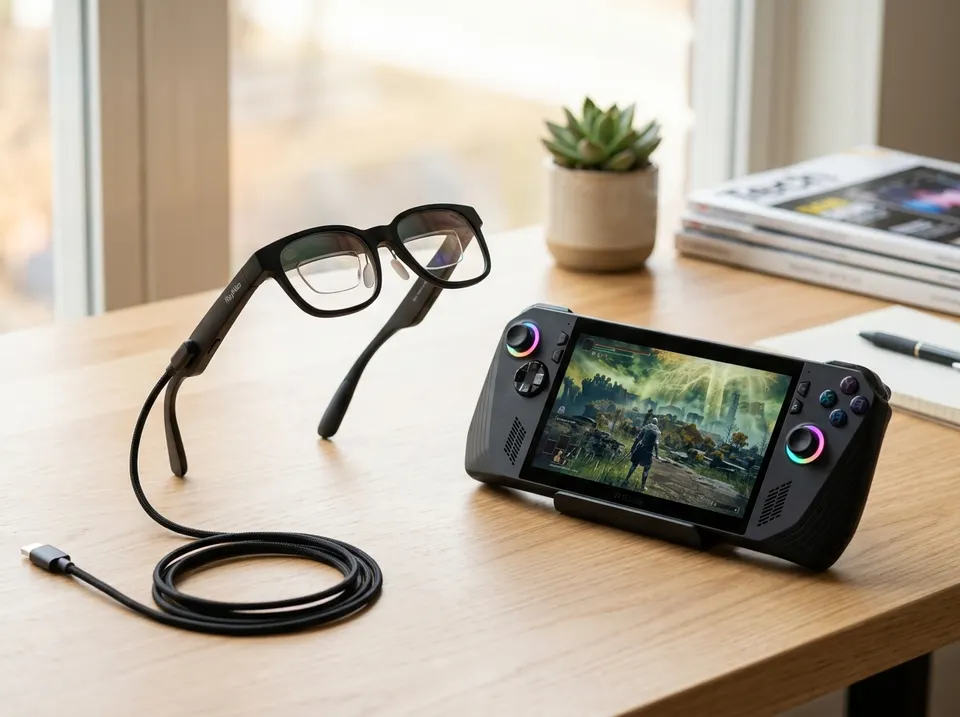
The RayNeo Air 4 Pro AR/XR Smart Glasses (201-Inch 120Hz Micro-OLED Virtual Display) promises to project a massive 201-inch virtual cinema screen directly into your field of view. Featuring dual Sony Micro-OLED panels, a 120Hz refresh rate, 3D playback support, and direct USB-C DisplayPort Alt Mode plug-and-play compatibility with iPhone 15/16/17, Android phones, Steam Deck, and Nintendo Switch 2, it is marketed as the ultimate portable gaming and movie accessory for $349.
However, the downside first: optical corner blurriness, face fitment limitations, rapid host battery drain, nose pad pressure, and audio leakage reveal critical trade-offs.
1. Corner Blurriness & Fixed IPD Sweet Spot
The biggest user complaint revolves around optics and pupil alignment:
- Fixed Inter-Pupillary Distance (IPD): Unlike VR headsets with mechanical IPD adjustment dials, the RayNeo Air 4 Pro uses a fixed optical distance.
- Fuzzy Game HUD Elements: If your eyes are slightly closer or wider than the average 63mm IPD, the center of the 201-inch screen looks sharp, but all four corners become blurry or cut off, making game health bars and small text unreadable.
2. No Internal Battery: Rapid Host Drain
The glasses have zero battery inside to keep the frame lightweight (76g):
- Host Device Battery Drain: The glasses draw 5V power continuously from your connected iPhone, iPad, or Steam Deck.
- Playing games on a Steam Deck with the glasses attached drains the handheld battery in under 90 minutes.
- Dongle Clutter: To play and charge simultaneously, you must buy an extra $35–$45 dual USB-C power splitter adapter.
3. Nose Pad Pressure & Facial Discomfort
To get your eyes into the optical “sweet spot” and reduce corner blur, you must push the glasses close to your face:
- Heavy Bridge Weight: The front birdbath glass prism structure weighs down heavily on the bridge of your nose.
- Red Marks: After 30 to 45 minutes of movie watching, users report painful red pressure indents on their nose.
4. Temple Speaker Audio Leakage
The arms of the glasses feature open-ear micro-speakers aimed down toward your ears:
- Zero Privacy: Sound leaks freely into the surrounding room. Anyone sitting next to you on an airplane, bus, or quiet bedroom can hear your movie dialogue or game sound effects.
- Using wireless earbuds alongside the glasses adds another layer of device management.
5. Summary: Great Portable Cinema, High Fitment Sensitivity
If you fit the average IPD distance, play handheld games in dark rooms, and don’t mind carrying a USB-C power adapter, the RayNeo Air 4 Pro offers a fun 120Hz virtual theater screen for $349.
However, if you have non-standard eye spacing, hate nose bridge pressure, or expect full 6DOF spatial computing, skip the RayNeo Air 4 Pro and look at adjustable alternatives like the XREAL Air 2 Pro or standalone VR headsets like the Meta Quest 3S.
Editorial disclosure: FlawCheck did not physically test this product. This research-based assessment uses published specifications and available independent or attributable owner evidence. Verify current pricing, policies, compatibility, and product revisions before purchase.