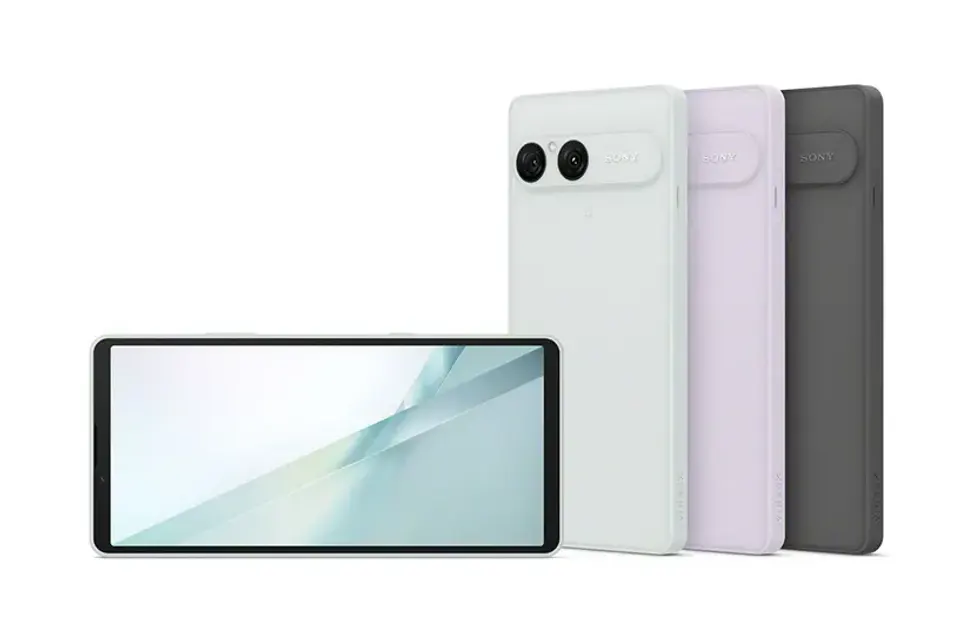
Sony announced the Xperia 10 VIII on August 25, 2026. Regional price and some detailed specifications were not confirmed in the corporate release, so do not treat early retailer listings as final.
Sony’s Xperia 10 VIII keeps the line’s unusual appeal: a compact body, clean design and an OLED screen rather than the giant dimensions common elsewhere. Sony says the screen is about 50% brighter than the previous model and that the speakers are louder and fuller. Those are sensible upgrades—but not reasons to buy without checking the trade-offs.
Sony Xperia 10 VIII review: the short version
This is best treated as an early review and buying-risk assessment, not a finished hands-on verdict. The Xperia 10 VIII has a clear niche for buyers who want a smaller Android phone, but several purchase-critical questions still depend on independent testing: sustained performance, battery endurance, charging time, camera consistency and thermals.
The strongest reason to wait is not that the phone already looks bad. It is that Sony’s launch information answers the specification questions more clearly than the ownership questions. Until those test-dependent gaps close, the safest conclusion is that the Xperia 10 VIII looks promising for a specific kind of buyer rather than broadly competitive for everyone.
1. Performance review: what the Snapdragon 6 Gen 3 can and cannot tell us
For upgrade context, see the flagship Snapdragon scope and variant rules. Xperia’s 6 Gen 3 is outside that sequence: its flagship benchmark rows cannot be reused as Xperia results. This review still needs its own sustained gaming and thermal measurements.
The Snapdragon 6 Gen 3 should handle messaging, streaming and everyday photography. It is not designed to match flagship chips in sustained gaming, video exports or demanding on-device AI workloads. A 120Hz interface can feel smooth while heavier apps still expose the performance gap.
For buyers searching for a Sony Xperia 10 VIII performance review, the important distinction is between expected everyday speed and measured sustained performance. Chip choice gives us a reasonable idea of the phone’s class, but it does not tell us how aggressively Sony tunes thermals, how performance changes in longer gaming sessions, or whether the chassis becomes uncomfortable under sustained load.
Those conclusions remain pending until repeatable independent testing is available. FlawCheck will not turn processor specifications into synthetic benchmark claims or thermal conclusions that have not been measured.
2. Sony did not put a clear global price in the announcement
Value cannot be judged in isolation. Sony’s compact design may command a premium, but Pixel and Galaxy alternatives often offer faster processors, stronger camera processing and clearer long-term software policies. Wait for the price in your country.
That matters especially for a mid-range phone: a modest hardware compromise can be reasonable at one price and difficult to justify at another. The Xperia 10 VIII’s final value verdict therefore depends heavily on regional pricing and storage configuration, not only on the specification sheet.
3. Battery and charging test status: do not confuse endurance claims with measured results
Sony highlighted endurance and viewing improvements, not a major charging breakthrough. Buyers coming from Chinese mid-range phones may find Xperia charging conservative. Battery life matters, but slow recovery is inconvenient during travel.
A proper Xperia 10 VIII test needs to separate three questions: how long the battery lasts in mixed use, how quickly it recharges, and whether heat or background behavior changes those results over repeated cycles. None of those should be treated as settled from launch material alone.
Until reliable measurements are available, FlawCheck is intentionally not publishing a claimed screen-on-time figure, a charging-time figure or a battery score for this phone.
4. Camera test status: hardware layout is only part of the story
The phone’s dual-camera approach avoids useless filler sensors, yet it also provides less optical flexibility than competitors with a capable ultrawide or telephoto camera. Sony’s processing can be attractive, but real sample comparisons are needed before calling it a camera winner.
For a meaningful camera review, the missing evidence is not another specification table. What matters is consistency across daylight, indoor scenes, motion, portraits, ultrawide use and video, plus how reliably the camera app chooses exposure and processing. Those are precisely the areas where independent sample comparisons matter more than launch claims.
5. Display and speakers look improved, but the practical gains still need context
Sony says the OLED panel is roughly 50% brighter than the previous generation and that the stereo speakers are louder and fuller. Both changes address practical weaknesses rather than chasing headline specifications, which is encouraging.
However, a brighter panel is not automatically a class-leading panel. Outdoor readability, color behavior at different brightness levels and any comfort-related display characteristics still need independent measurement before they can support a stronger verdict.
6. Availability and service can be patchy
Sony says availability starts from mid-September and varies by market. Limited carrier presence, fewer accessories and longer repair logistics can matter more over two years than a specification-sheet advantage.
This is one of the Xperia line’s most important ownership trade-offs because it can affect warranty handling, replacement parts, accessory choice and resale convenience. Buyers should check the exact regional model and local support situation rather than assuming launch availability is global.
7. Software support still needs a firm, region-specific promise
A mid-range phone becomes expensive if its security-support window is short. Confirm the policy for the exact regional model before ordering rather than assuming it matches Samsung or Google.
Software support is also part of the phone’s long-term value, not merely a feature-list item. If Sony publishes a clear update commitment for the Xperia 10 VIII, that evidence should materially affect this review because it changes the ownership horizon and resale case.
Who should buy the Xperia 10 VIII — and who should wait?
The Xperia 10 VIII makes the most sense for buyers who specifically value a compact, lightweight Android phone and Sony’s understated design. Those priorities are increasingly uncommon, so the phone does have a genuine niche rather than being just another mid-range handset.
You should be more cautious if your priorities are gaming performance, very fast charging, broad retail/service coverage or a clearly documented long software-support window. In those cases, waiting for independent test data and final regional details is more useful than pre-ordering from the specification sheet.
Verdict
The Xperia 10 VIII looks like a thoughtful refinement for people who specifically want a smaller Sony phone. Everyone else should wait for price, independent battery, charging, performance and camera tests, plus a written update policy.
The key point of this Sony Xperia 10 VIII review is therefore not that the phone has already failed any test. It is that several ownership-critical questions are still untested, and those unanswered questions are exactly where the buying decision should be made.
Sources and Verification
Editorial note: FlawCheck did not physically test this phone. The review remains provisional and will be updated when reliable independent performance, battery, charging, camera and thermal evidence is available.